
Quick answer
Pitta is the dosha of fire and water, and pitta types run hot: hungry on schedule, sharp in an argument, organised without trying, first to roll up their sleeves when something needs deciding. It overlaps with the type A personality but is not the same thing, because type A describes behaviour while pitta describes a whole constitution, body included. Late meals bring irritability because the sharp digestive fire, tikshna agni, demands fuel on schedule, so regular meals are the unglamorous fix.
Some people run hot. They are hungry on schedule, sharp in an argument, organised without trying, and the first to roll up their sleeves when something needs deciding. Ayurveda calls this pattern pitta, the dosha of fire and water. When pitta leads your constitution, it shows in your build, your appetite, your skin and the particular way you take charge of things.
This guide covers the pitta body type in full: how it looks, thinks, digests and sleeps, the signs it has tipped into excess, and what cools it back down. If you are not sure which dosha leads in you, find yours with the free dosha quiz, or begin with our overview of the three doshas.
What a pitta body type means
Your body type, or prakriti, is the mix of the three doshas you were born with, and a pitta body type means pitta sets the tone. Pitta is built from fire with a little water, and its qualities read like a description of fire kept in a vessel: hot, sharp, light, slightly oily, spreading, intense.
Charaka Samhita gives pitta charge of transformation: digestion and metabolism first, and by extension body heat, complexion, courage and the clarity of the mind. Its main seat is the stomach and small intestine, the body’s kitchen, which is why so much of pitta’s story is told through appetite.
Physical characteristics
Pitta builds are medium and well proportioned: moderate height, moderate frame, decent musculature that develops without much fuss. Weight holds fairly steady, gained and lost without drama. Next to vata’s lightness and kapha’s solidity, pitta reads as athletic.
The heat shows at the surface. Skin is warm, slightly oily and quick to flush, often fair or coppery, given to freckles and moles, and it burns in the sun before it tans. Hair is typically fine and straight, and pitta heads tend to grey or thin earlier than the other types. The eyes are penetrating; the gaze is one of the ways you spot pitta across a room.
Pitta people run warm in every sense. They sweat readily, prefer cool rooms and cool drinks, wilt in midsummer more than others, and their hands are warm when everyone else’s are cold. Hunger is punctual and serious; a missed meal is not a small event for a pitta type.
The pitta mind
Pitta minds are sharp. They grasp a problem quickly, cut to what matters, decide, and hold the plan in order. Pitta people make natural teachers, organisers and leaders, and they are the rare keepers of lists that actually get finished. Speech is precise and persuasive, sometimes more pointed than intended.
In balance, all of this feels like clarity and warmth: focused, courageous, generous with attention. Out of balance, the sharpness turns on people, starting with the pitta person themselves. The inner critic gets louder, patience thins, competitiveness leaks into places it does not belong, and small obstacles start to feel like insults. Anger is pitta’s signature emotion the way anxiety is vata’s.
The tell is intensity. A pitta person rarely does anything by halves, which is why they are often told to relax, and why being told to relax annoys them. Ayurveda’s advice is more useful than that, and most of it comes down to cooling the system rather than blunting the drive.
Digestion and sleep
Pitta agni, the digestive fire, is tikshna: sharp. Appetite is strong and punctual, digestion efficient, and a pitta type can put away quantities that surprise people. The same fire overshoots when aggravated: acidity, heartburn, loose and urgent digestion, and the mealtime irritability that pitta households learn to pre-empt. Feed a pitta on time and half the day’s problems never happen.
Sleep is moderate and efficient. Pitta people fall asleep fairly easily, sleep soundly for a middling number of hours and wake alert. The weak point is the pitta stretch of the night, ten to two. Staying up past ten invites a second wind that burns until midnight, and an aggravated pitta wakes hot in the small hours, mind already drafting emails.
The single most useful pitta habit costs nothing: make lunch the main meal. Digestion is strongest in the middle of the day, so the biggest plate lands when the fire can meet it, evenings stay lighter, and sleep comes easier. It is the piece of Ayurvedic advice pitta types adopt with the least argument, because the difference is quick to feel.
Modern physiology describes the same machinery in different words. The National Institute of Diabetes and Digestive and Kidney Diseases, in its account of how the digestive system works, sets out the acid and enzymes made by the stomach lining, the enzymes the pancreas adds, and the waves of peristalsis that carry everything along. Ayurveda gathers all of that under one word, agni, then adds a claim conventional physiology does not make: that the strength of the system varies by constitution and by hour. You do not have to accept the second half to make use of the first. Someone whose stomach produces acid enthusiastically really does need food in it on a predictable schedule.
Pitta through the day, the year and a lifetime
The pitta hours run from ten to two, day and night. The daytime stretch is when agni peaks, which is why Ayurveda puts the main meal at midday rather than in the evening. The night stretch is for deep rest, best protected by being asleep before it starts.
Summer is pitta season. Heat, sun and humidity raise everyone’s pitta, and pitta-led people feel it first: flushed skin, a shorter fuse, flare-ups of rashes and acidity. Midsummer is when a pitta type most needs shade, water, lighter food and fewer deadlines.
Across a lifetime, adulthood is the pitta stage: the decades of ambition, work and responsibility. A pitta-led person in the pitta stage of life, in a pitta summer, is triple-stacked, and that is exactly the person the cooling advice below was written for.
A pitta day, hour by hour
Advice about coolness and margins stays abstract until it has clock times attached. What follows is one workable shape for a pitta day. The hours are approximate; the order is the part that matters.
Morning, 5.30 to 9
Wake around half past five or six, while the air is still cool. Pitta people wake alert, which is a gift and a trap, because the phone is right there and the inbox is already interesting. The first ten minutes are worth defending. Drink a glass of water at room temperature, or water in which a teaspoon of coriander seed has soaked overnight. Scrape the tongue. Get outdoors before the sun has any strength in it.
Breakfast around half past seven, sweet rather than sharp: oats cooked with milk, a chopped pear and a little cardamom; wheat toast with butter; stewed apple with coconut. Save the coffee for after the food, if you drink it at all. A fiery breakfast on an empty pitta stomach sets the tone for the whole morning, and not in a helpful direction.
Working hours, 9 to 2
Pitta concentration between nine and noon is the best any of the three types gets. Spend it on the hardest thing rather than on email. Two blocks of ninety minutes, with a real break in between, will beat five scattered hours. Lunch at half past twelve, and make it the largest meal of the day: rice with dal, a green vegetable, cucumber raita, a spoon of ghee. Take twenty five minutes away from a screen for it. A pitta person who eats lunch at the desk will be sharp with somebody by three, and will not connect the two events.
Afternoon, 2 to 6
The hottest stretch of the day, and the stretch where pitta overshoots. Give it the work that tolerates a shorter fuse: meetings, editing, correspondence, admin. Keep water on the desk. Around four, eat something sweet and plain, a few dates or a ripe pear, or milk with a little fennel. The second coffee at this hour is the beginning of the ten o’clock second wind, whatever it feels like at the time.
Evening, 6 to 10
Dinner by half past seven and lighter than lunch: soup, khichdi, steamed vegetables with rice. Go easy at night on chilli, vinegar, tomatoes and aged cheese, which are the four things a tired pitta person most wants. Walk afterwards for twenty minutes, near water or trees if you have them, and preferably not while listening to something that makes you argue.
Work stops at nine. The second wind at ten is not extra energy, it is the pitta hours opening, and a pitta person still at the desk when it arrives will be there at one. Cool shower, coconut oil rubbed into the soles of the feet, lights out by half past ten.
Getting through pitta season
Adjusting habits to the season is called ritucharya, and for a pitta person the season in question is summer. From roughly June into early September the weather supplies heat, light and sharpness for free, and a pitta constitution that coped comfortably in March starts to flare. The skin goes first, then the temper.
Seven changes worth making before the heat arrives rather than after:
- Move exercise to before eight in the morning or after six in the evening. A midday run in July is the single most reliable way for a pitta type to ruin a week.
- Eat sweeter and lighter: rice, milk, coconut, cucumber, melon, ripe pears, sweet mango. Cooked and simple beats elaborate.
- Cut the sour and fermented right back. Vinegar, pickles, aged cheese, wine and tomato-heavy sauces all read as heating in Ayurvedic terms, whatever temperature they leave the fridge at.
- Swap sesame oil for coconut or sunflower for massage, and oil the scalp and the soles of the feet in the evening.
- Drink at room temperature rather than iced, and keep a jug of water with coriander and fennel seed steeped in it.
- Take the holiday now. Summer is the sensible time for a pitta person to stop working, and September is not.
- Wear loose cotton, cover your head between eleven and three, and look for shade rather than relying on sunblock alone. Pitta skin burns before it tans.
The one that surprises people is alcohol. A cold beer in a heatwave feels like relief and is classified as hot, sharp and sour in Ayurveda, which is pitta three times over. If you drink at all in July, drink less and drink earlier, and expect the skin and the sleep to notice either way.
Autumn brings relief. Once the air turns dry and cool, pitta settles on its own and most people find their skin clears and their patience returns without doing anything. That is the moment to relax the summer rules, though not to forget them, because next June will be along soon enough.
Signs pitta is out of balance
Excess pitta announces itself as heat, sharpness and sourness. If several of these have become regular visitors, pitta is running high:
- Acidity, heartburn or urgent, loose digestion
- Skin flare-ups: rashes, breakouts, redness, flushing
- Running hot: heavy sweating, poor tolerance of hot weather
- Irritability, impatience, a shorter fuse than usual
- An inner voice that has turned harsh and critical
- Waking between ten and two, hot and alert
- Red, burning or light-sensitive eyes
- Perfectionism tipping into fault-finding, with yourself first in line
A pattern like this is pitta asking for coolness, sweetness and unscheduled time, and it tends to respond quickly once it gets them.
Heartburn deserves its own paragraph, because it is the item on that list most likely to send a pitta type to a doctor. Harvard Health reported on a study in JAMA Internal Medicine, led by Raaj Mehta, which followed women over several years and found that five plain habits did most of the work: keeping to a healthy weight, not smoking, half an hour of moderate activity a day, holding tea, coffee and fizzy drinks to two cups, and eating a sensible diet. Women who kept all five appeared to prevent close to 40 percent of their weekly reflux symptoms. Four of those five are already standard pitta advice. Ayurveda would add the thing it always adds: eat at the same times, and eat a proper lunch.
What cools pitta
The principle, as always in Ayurveda, is opposite qualities. Pitta is hot, sharp and intense, so it settles with cool, mild, sweet and unhurried. The whole programme leans one way: cool it down. The overlap with modern dermatology is hard to miss in one place. The US National Institute of Arthritis and Musculoskeletal and Skin Diseases lists heat, sunlight, alcohol, stress and spicy food among the common triggers for rosacea, which is close to the list Ayurveda has been handing pitta types for a very long time.
Food that cools
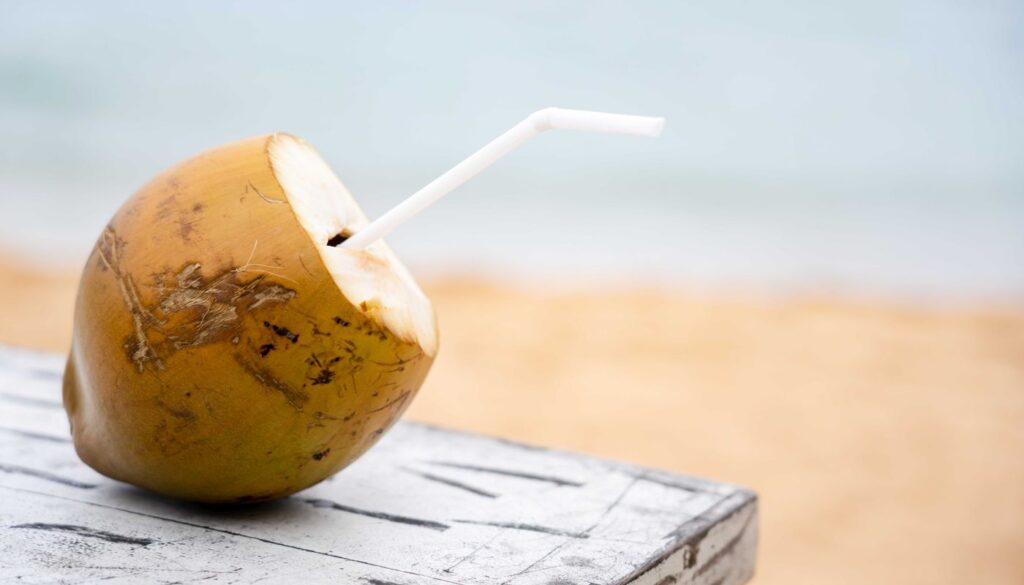
Sweet, bitter and astringent are the pitta-calming tastes: rice and oats, sweet ripe fruit, milk and ghee, coconut, cucumber, leafy greens. Cooling means the food’s nature, not the fridge; Ayurveda is wary of iced drinks for every type, pitta included. Herbs like coriander, fennel and mint are traditionally used where a vata kitchen would reach for ginger.
The other side of the ledger is what feeds the fire: chilli and heavy spicing, fried and very salty food, sour ferments, alcohol and coffee. And pitta’s most important food rule is not an ingredient at all: do not skip meals. A pitta type who misses lunch borrows the shortfall from everyone around them.
| Favour | Ease back on | |
|---|---|---|
| Tastes | Sweet, bitter, astringent | Pungent, sour, very salty |
| Temperature | Cool and room-temperature food | Piping-hot, heavily spiced dishes |
| Cooking | Steamed, simmered, fresh | Deep-fried, charred, barbecued |
| Drinks | Water, milk, coconut water, mild herbal teas | Coffee, alcohol, energy drinks |
| Meals | Main meal at midday, never skipped | Skipped lunches, late heavy dinners |
The tastes are the principle. A shopping list is quicker to use on a Tuesday.
| Favour | Reduce | |
|---|---|---|
| Grains | Basmati rice, oats, wheat, barley, couscous | Corn, millet, rye, buckwheat, brown rice in quantity |
| Vegetables | Cucumber, courgette, asparagus, broccoli, leafy greens, sweet potato, green beans | Tomato, raw onion, raw garlic, hot peppers, mustard greens, radish |
| Fruit | Sweet ripe mango, pear, melon, sweet apple, coconut, dates, sweet grapes | Sour cherries, grapefruit, unripe pineapple, sour citrus, cranberries |
| Protein | Mung dal, chickpeas, red lentils, tofu, egg whites, white fish, turkey | Red meat, shellfish, egg yolks in quantity, heavily salted or smoked meats |
| Dairy | Milk, ghee, unsalted butter, fresh soft cheese, sweet lassi | Hard aged cheese, sour cream, buttermilk, salted yoghurt in the evening |
| Oils | Coconut, sunflower, olive, ghee | Sesame, mustard oil, almond oil, anything reheated for frying |
| Spices | Coriander, fennel, mint, cardamom, turmeric, saffron, a little cumin | Chilli, cayenne, mustard seed in quantity, black pepper, raw garlic, asafoetida |
| Drinks | Water at room temperature, coconut water, milk, mint or fennel tea | Coffee, alcohol, energy drinks, sour fruit juices, iced everything |
The right-hand column is not a banned list. It is what a pitta person should stop eating every single day, particularly in July. One curry with proper chilli in it, eaten at midday in February, will not undo anything.
A routine with margins
Pitta types keep schedules well; the risk is what they put in them. The classic pitta failure is a day optimised to the minute with no slack, so the most useful routine change is subtraction: margins between commitments, evenings that are genuinely off, one stretch of the week with nothing to win. A steady morning dinacharya suits pitta as it suits everyone; the pitta-specific additions are getting outdoors early while the day is still cool, and closing the laptop before the ten o’clock second wind arrives.
Competition is fine in doses, though a pitta person should notice when every hobby has quietly turned into a contest. Exercise gets a section of its own further down, because for pitta the timing of it matters more than the choice of activity.
Cooling practices
The classical pitta practices are gentler than pitta people expect. Abhyanga, the warm-oil self-massage, is done with coconut or sunflower oil rather than the sesame used for vata. Time near water and walking in moonlight are prescribed for pitta in the old texts without a hint of embarrassment. Cooling breath practices, sheetali among them, are traditionally used to take the edge off pitta heat before sleep.
None of this is about putting the fire out. Ayurveda values pitta heat; it is what digests food and ideas alike. The old framing is banking a fire, keeping it hot enough to work and contained enough not to burn the cook.
Movement that suits a pitta body
Pitta bodies take to exercise readily. Muscle comes without much coaxing, stamina is good, and the competitive edge that makes pitta people finish things also makes them train harder than anyone told them to. The problem is almost never motivation. It is that exercise generates heat, and pitta already has enough.
Timing does more work here than the choice of activity. Train before eight in the morning or after six in the evening, and leave the middle of the day alone from May to September.
- Swimming is the ideal pitta exercise, because the water carries the heat away as fast as the effort makes it.
- Cycling in shade, early hiking, and walking near water all suit pitta. So does anything played in a pair or a team, where the point is partly the company.
- Keep the effort at about sixty or seventy percent of what you could do. A practical gauge: breathe through the nose. When you have to open your mouth to keep going, you have moved into pitta territory.
- For yoga, favour twists, forward bends, moon salutations and long slow exhalations. Cooling breath practice, sheetali, at the end is more use to a pitta type than another round of core work.
- Strength training three times a week is fine. Training to a personal record every single session is where pitta injuries come from.
Hot yoga deserves a specific mention. A heated room is the exact opposite of what a pitta constitution needs, and pitta types love it, because it feels like winning. If you go, go in winter, drink afterwards, and notice what your skin does for the following three days.
The signs of overtraining in a pitta body are recognisable: rashes or breakouts a day or two after hard sessions, waking hot at two in the morning, a resting heart rate that has crept up, injuries acquired by carrying on through pain, and a noticeably shorter fuse with the people at home. The remedy is a fortnight of swimming and walking, not a change of programme.
Pitta at work and in relationships
Pitta is the constitution most likely to end up running something. Pitta people set a direction, hold a standard, tell you what they think, and finish what they started. In a team they are the one who notices the plan has no owner and quietly becomes the owner. Promotion tends to find them.
What follows them into the job is the sharpness. A pitta manager under pressure gives feedback that is accurate and lands harder than intended, expects of others what they expect of themselves, and reads a missed deadline as a character flaw rather than a scheduling problem. The useful correction is not softer standards. It is a gap between noticing something and saying it. Twelve hours is usually enough. So is eating before the difficult conversation, which sounds trivial until you have watched a pitta person conduct a review at half past one on an empty stomach.
The other work risk is the calendar itself. Pitta types plan well and therefore fill every hour, and a day with no margin in it turns any small delay into heat. Book the gaps first. An hour that is not spoken for is a pitta medicine, and it will be the first thing given away if you let it.
In relationships, a settled pitta is loyal, direct, protective and unusually easy to plan a life with. You know where you stand, and what was promised gets done. The friction comes from the same directness when the fire is high: winning an argument with a partner is a hollow victory, and a pitta person can be halfway through the win before noticing. Debriefing the day at eleven at night is another common pattern, and it rarely goes well for anyone.
Two habits help more than any amount of resolve. Eat together on time, because most pitta arguments are held at the end of a long gap between meals. And keep one part of the week that has no purpose attached to it, where nothing is being improved, learned or optimised. Pitta partners who protect a slow Sunday morning fight considerably less on Tuesday.
Pairings run true to form. Pitta with vata is quick and productive, and the pitta partner will need to remember that vata worry is not laziness. Pitta with kapha is a workable match, since kapha rarely takes the bait in an argument, though the pitta partner may read that calm as indifference when it is simply a different pace. Pitta with pitta is capable of a great deal and needs an explicit rule about what does not get discussed after nine in the evening.
When pitta shares the lead
Most people are dual types, with two doshas running close. Vata-pitta pairs speed with intensity: a lighter frame, a quick warm mind, digestion that swings between bloating and acidity. Pitta-kapha pairs fire with a sturdy frame: formidable stamina and strong digestion, with inflammation and slow weight gain as the watch-outs. We cover both properly in the guide to dual-dosha types. If the lighter, quicker current sounds more like you, start with the vata body type; if the steadier one does, read the kapha body type next.
If the quiz gave you pitta, start here
A pitta reader will want the complete protocol, will build it properly, and will drop it in three weeks because it became another thing to be good at. Take four changes and hold them for a month.
- Eat a real lunch at half past twelve, sitting down, every working day. This is the whole programme in one line.
- Stop work at nine in the evening, before the second wind arrives. Not when you feel tired. At nine.
- Cut one heating thing. Coffee, alcohol or chilli. Pick whichever you would defend most strongly, which is the one to pick.
- Put one unscheduled hour a week in the diary and treat it as though somebody else booked it.
Skin and digestion usually respond first, often inside two weeks. Sleep follows. Temper is last, and it is generally other people who notice before you do. If you want the wider map of how the seven constitutional types are arranged, our overview of Ayurvedic body types lays it out.
One caution about the result itself. A questionnaire cannot easily tell the difference between the constitution you were born with and a hot spell you are currently in, and a stressful year raises pitta in people who have very little of it by nature. We separate the two in prakriti vs vikriti. A trained practitioner does it through the pulse, the tongue, the skin and a long conversation, and if learning to read constitutions properly appeals more than being read, our guide to Ayurveda certification explains how that training works and what a credible course covers.
Common questions about the pitta type
Is a pitta body type the same as a type A personality?
They overlap, but they are not the same thing. Type A describes behaviour; pitta describes a whole constitution, body included: the punctual appetite, the warm flushed skin, the efficient digestion. Plenty of pitta people are easy-going, especially when their meals, sleep and summers are managed well. The behaviour sharpens mainly when the constitution is pushed out of balance.
Why do pitta types get so irritable when meals are late?
Ayurveda’s answer is that tikshna agni, the sharp digestive fire, demands fuel on schedule, and when it is not fed, the same sharpness rises as irritability. The fix is unglamorous: regular meals, and a real lunch at midday rather than a snack at a desk.
What aggravates pitta most?
Heat in all its forms: chilli, alcohol, midday sun, stacked deadlines, competition without rest. Skipped meals belong on the list too. If you change one thing, protect a proper midday meal and an evening that ends before ten; most pitta people notice the difference within a week or two.
Does a pitta type have to give up spicy food?
No, and the blanket version of this advice puts people off Ayurveda unnecessarily. Spice and heat are two different things. Coriander, fennel, cardamom, turmeric, mint and saffron are all aromatic and all cooling, and a pitta kitchen using them well is a long way from bland. What genuinely aggravates pitta is the hot end: chilli, cayenne, mustard seed by the spoonful, raw garlic, and black pepper in quantity. Reduce those, especially between May and September, and keep them for a midday meal when you do want them. Chilli at ten at night is a different proposition from chilli at one in the afternoon.
Can a pitta type drink coffee or alcohol?
Both are classified as heating and sharp, so both push pitta in the wrong direction, and both are common in pitta lives because they suit the pace. If you keep coffee, keep it to one cup, after food, before midday, and expect the acidity to tell you if that is still too much. Alcohol is the harder one, since it is sour as well as hot, and it lands on the liver, which Ayurveda considers a seat of pitta. Most pitta people who cut back report the same three changes in roughly the same order: clearer skin, cooler nights, and a longer fuse. If heartburn or rosacea is already in the picture, alcohol is the first thing to test by removing.
Living well as a pitta type
A balanced pitta person is a pleasure to be around: warm, clear, generous, the one who gets things done without drama. The route there is mostly restraint: cooler food, cooler hours, margins in the calendar, and the occasional afternoon spent deliberately winning nothing.
If the mechanics of constitutions interest you, how they are read and how food and routine are built around them, for yourself or for clients, that is the heart of our Ayurveda Lifestyle Coach Training.
This article is educational and not medical advice. Ayurvedic practices traditionally support wellbeing and belong alongside, never in place of, care from a qualified health professional.
Our self-paced training in Ayurvedic lifestyle, covering daily routine, nutrition, herbs and ethical coaching skills. See the course.