

Quick answer
Vata is the dosha of air and space, and vata types run light: quick to think, quick to move, first in the room to feel the cold, ravenous at ten and indifferent to lunch by one. Vata frames can build muscle and gain weight, but slowly, through patient consistent strength training, warm protein-rich meals at regular times, and more rest between sessions than other types need. Because stress raises vata in almost everyone, check whether you are a vata type or simply a stressed one.
Some people run light. They think quickly, move quickly, feel the cold before anyone else in the room, and can be ravenous at ten yet indifferent to lunch by one. Ayurveda has a name for this pattern: vata, the dosha of air and space. When vata leads your constitution, it shapes your frame, your digestion, your sleep and the way your mind moves.
This guide walks through the vata body type from every angle: what it looks like, how it thinks, digests and sleeps, how it slips out of balance, and what steadies it. If you do not yet know which dosha leads in you, find yours with the free dosha quiz, or start with our overview of the three doshas and come back.
What a vata body type means
Your body type, or prakriti, is the particular mix of the three doshas you were born with. Nobody is one dosha and nothing else; a vata body type means vata leads your mix and sets the tone.
Vata is built from air and space, and its qualities follow from its elements: light, dry, cold, rough, subtle and mobile. Charaka Samhita describes vata as the mover of the body, the force behind breath, circulation, the nervous system and elimination. Every vata trait in this guide is one of those qualities showing up somewhere, whether as light bones, dry skin, cold hands or a mind that will not sit still.
Whether that inherited mix leaves any trace in the body itself is something modern researchers have begun to test. A 2015 study in Scientific Reports, led by Periyasamy Govindaraj at the Centre for Cellular and Molecular Biology in Hyderabad, compared the genomes of healthy volunteers whom Ayurvedic physicians had independently sorted into vata, pitta and kapha groups. The team found 52 genetic markers that differed significantly between the three, and the pattern held regardless of the participants’ ancestry. One study on its own settles very little. It does suggest the old classification tracks something in the body rather than working as a personality quiz in Sanskrit.

Physical characteristics
Vata builds are light. Most vata-led people are slim, with narrow shoulders and hips, visible joints and veins, and a tendency to be unusually tall or unusually small; vata rarely does average. Muscles are lean rather than bulky. Gaining weight takes deliberate effort, and it goes as easily as it came.
The dryness shows everywhere. Skin tends to be thin, dry and cool to the touch, quick to chap in wind and winter. Hair is often dry, curly or frizzy; nails can be brittle and ridged. Joints crack and pop, and they feel the cold first.
Vata people run cold. Cold hands and feet are close to a signature, and a vata person reaches for a jumper long before anyone else. Appetite varies day to day, energy comes in bursts followed by sudden fatigue, and movement is quick, light and a little irregular: fast walking, expressive hands, a voice that speeds up when the ideas do.
The vata mind
Vata is the quickest mind of the three. Vata people learn fast, connect ideas from distant corners, and light up around anything new. Improvisers, artists and the friend who has read half of everything usually carry a good deal of vata.
The same speed has a cost. Vata memory takes things in quickly and lets them go quickly. Enthusiasm burns bright, then jumps to the next thing, which is why a vata life can hold five half-finished projects at once. None of this is a flaw in the Ayurvedic view; it is the mobile quality doing what it does. The work is not to become someone else but to give all that movement somewhere steady to land.
Under pressure, the movement turns inward. Worry at vata speed feels like anxiety, and an unbalanced vata mind does not slow down at night, it spins. In balance, the same person is spontaneous, cheerful and easily delighted. The difference between the two is usually rest, warmth and routine rather than personality.
Digestion and sleep
Ayurveda calls the digestive fire agni, and vata comes with vishama agni, the irregular kind. Hunger arrives at odd times or not at all; digestion is strong one week, gassy and bloated the next. Constipation is the classic vata complaint. Charaka Samhita places vata’s main seat in the colon, and that is exactly where its dryness and irregular movement show up first.
Two everyday habits hit vata digestion hardest. The first is caffeine on an empty stomach, which hands the light, mobile qualities more speed than they know what to do with. The second is eating at a desk, on the move or mid-scroll; vata digestion needs the body still even more than it needs the right menu. Neither habit needs abolishing, just softening: coffee after breakfast rather than instead of it, and ten unhurried minutes around each meal.
Sleep runs the same way. Vata sleep is light and easily broken, and falling asleep can take a while because the mind keeps offering one more thought. Small noises wake a vata sleeper that a kapha type would sleep straight through. Vata people generally need more rest than they think, and they feel a shortfall faster than the other types do.
Conventional sleep advice and Ayurvedic advice converge here more than you might expect. The Sleep Foundation’s guidance on healthy sleep habits puts a fixed wake time at the top of the list, seven days a week including weekends, and recommends a bedroom of around 65 to 68 degrees Fahrenheit with screens put away well before bed. Ayurveda would add one item to that list and qualify another. The addition is warm oil rubbed into the feet. The qualification is temperature: a vata sleeper does better at the upper end of that range, or at the cool end with proper blankets, because a cold vata body wakes at three in the morning and lets the mind take the blame.
Vata through the day, the year and a lifetime
Vata is not only a body type; it has its own hours, its own season and its own stage of life. The vata hours run roughly from two to six, morning and afternoon. The pre-dawn stretch is light and clear, which is why traditional routines rise before sunrise to use it, and it is also why an unsettled vata mind so often wakes between two and four with thoughts already running.
Autumn and early winter are vata season: cold, dry, light and windy, the vata qualities loose in the weather. Everyone’s vata rises then, and vata-led people feel it most, in drier skin, colder hands, patchier sleep and more background worry. Vata season is when a vata person’s routine earns its keep.
Across a lifetime, Ayurveda maps childhood to kapha, the middle years to pitta and later life to vata. From around sixty the vata qualities gather in everyone: lighter sleep, drier skin, a more delicate digestion. If vata already leads your constitution, the habits below simply matter more with each decade.
A vata day, hour by hour
Advice about warmth and regularity stays abstract until it has clock times attached to it. What follows is one workable shape for a vata day. Treat the hours as approximate and the order as the point.
Morning, 6 to 9
Wake at six, or at whatever hour you can actually hold every day of the week. Vata does better with a consistent waking time than with an early one, and a depleted vata person rising at four in the name of tradition usually just gets more depleted. Drink a mug of warm water. Scrape the tongue. Sit on the toilet whether or not anything feels urgent, because vata elimination responds to routine and to not being rushed.
Then oil, if you have ten minutes, and a warm shower. Breakfast by half past seven, cooked rather than raw: oat porridge with stewed apple, cinnamon and a spoon of ghee; semolina upma with a little coconut; eggs scrambled soft on buttered toast. A green smoothie at seven in the morning is a cold, raw, airy meal in a glass, which is three vata qualities before you have left the house. If you drink coffee, drink it after the porridge rather than instead of it.
Working hours, 9 to 2
Vata attention comes in sprints. Work in blocks of forty-five minutes or an hour, then stand up, and do not fill the gap with another screen. Around half past ten, have something warm: ginger tea, or milk with cardamom. Lunch between noon and one, and make it the largest meal of the day. Digestive fire peaks at midday for everyone, and a vata person who skips lunch will be shaky and short-tempered by four. Kitchari, dal with rice and ghee, a thick vegetable soup with bread, a bowl of stew. Sit down for twenty minutes. Eating at the keyboard undoes most of what the cooking achieved.
Afternoon, 2 to 6
The second vata window of the day opens at two, and it is when vata people scatter. Ideas multiply, tabs multiply, nothing closes. Put the detailed work in the morning and leave the afternoon for what suits a moving mind: conversations, first drafts, planning. At half past three, eat something small. Four dates and a handful of almonds soaked overnight will do, or warm milk with spice. A second coffee at this hour is the most common reason a vata person is still awake at eleven.
Evening, 6 to 10
Dinner by seven, lighter than lunch and still warm: vegetable soup, khichdi, roasted squash with rice. A raw salad at night is hard work for a vata digestion and usually turns up as bloating at bedtime. If the evening is mild, walk for fifteen minutes afterwards.
Screens off by nine. That is the hardest instruction in this guide and the one that changes the most. Then warm milk with a pinch of nutmeg, or plain warm water. Rub sesame oil into the soles of your feet and put socks on. Bed by half past ten. A vata mind that is still going at that point will keep going, so the wind-down has to begin before you feel tired rather than after.
Getting through vata season
Ayurveda calls the practice of adjusting habits to the season ritucharya, and for a vata person it is the difference between a hard autumn and an ordinary one. Vata season runs from roughly October into early January in a temperate climate: cold, dry, windy, the light going, the schedule breaking up around holidays and travel. Every quality of vata is loose in the weather at once.
Six changes, in the order they earn their keep:
- Sleep thirty to sixty minutes more than you do in summer, and get there by going to bed earlier rather than waking later.
- Move from oiling occasionally to oiling daily with warm sesame oil, and do the feet at night even on days you skip the full massage.
- Cook everything. Autumn is when raw food, however seasonal, stops working for vata. Swap the salad for roasted root vegetables and the cold sandwich for soup in a flask.
- Cover the head, ears and neck outdoors. Wind on the ears is a specific vata aggravator in the classical texts, and anyone who gets earache or a stiff neck every November already knows it.
- Do not fast or cleanse in autumn. Spring is the cleansing season, because that is when kapha loosens. A juice fast in November is a reliable way to finish the year cold and anxious.
- Cut travel where you can, and hold the mealtimes where you cannot. Air travel is vata in concentrated form: dry, cold, mobile, irregular.
The spices of the season help too, and they are the ones people reach for anyway: ginger, cinnamon, cardamom, clove, nutmeg, a little black pepper. Warm and faintly sweet, they suit vata and they suit the weather. Heavier fats do the same work, which is why ghee, sesame oil, almonds and full-fat dairy are more useful in November than in June.
Late winter is easier. By February the cold has turned damp and heavy rather than dry and light, which is kapha weather, and a vata person often feels steadier then than at any other point in the year. February is the moment to loosen the routine a little. October is not.
Signs vata is out of balance
Vata trouble announces itself as dryness, cold and irregularity. If several of these have crept in and stayed, vata is probably running high:
- Dry skin, dry hair, dry eyes or cracking joints
- Cold hands and feet that take ages to warm up
- Gas, bloating, constipation or an appetite that comes and goes
- Trouble falling asleep, or waking in the small hours with a busy mind
- Feeling anxious, restless or overwhelmed by small changes of plan
- Starting many things and finishing few
- Losing weight without trying, or forgetting to eat
- Feeling noticeably worse in cold, windy, dry weather
One or two of these in a bad week mean little. A steady cluster is vata asking for warmth, rest and rhythm, and the earlier it is answered the less there is to unwind.
What balances vata
The principle is opposite qualities. Vata is cold, dry, light and mobile, so it settles with warm, moist, grounding and regular. What is striking is how little of this is exotic. The NHS guidance for anxiety, fear and panic arrives at much the same practical ground from an entirely different direction: keep a regular routine, protect sleep, breathe slowly, cut the caffeine. Ayurveda got there first and called it vata, but nobody has to choose between the two accounts.
Food that grounds you
Warm, cooked, moist and lightly oiled food suits vata best: soups, stews, porridge, rice with ghee, root vegetables, stewed fruit. Sweet, sour and salty are the tastes that ground vata; pungent, bitter and astringent lighten it further. Cold, raw and dry food, however virtuous the salad looks, tends to leave a vata digestion worse than it found it.
Regularity matters as much as the menu. Three warm meals at roughly the same times each day settle vata digestion more reliably than any single ingredient, and eating sitting down, in some calm, counts for more than vata people like to admit.
| Favour | Ease back on | |
|---|---|---|
| Tastes | Sweet, sour, salty | Pungent, bitter, astringent |
| Temperature | Warm food, warm drinks | Iced drinks, cold and raw food |
| Texture | Moist, oily, well cooked | Dry and airy: crackers, crisps, popcorn |
| Meals | Regular times, calm settings | Skipped meals, eating on the move |
| Examples | Porridge, soups, stews, rice with ghee, cooked root vegetables | Raw salads as a main meal, dry cereal, coffee on an empty stomach |
Working from the tastes is useful once the principle is familiar. Until then it is quicker to work from a shopping list.
| Favour | Reduce | |
|---|---|---|
| Grains | Rice, cooked oats, wheat, quinoa, amaranth | Dry granola, crackers, corn, millet, buckwheat |
| Vegetables | Cooked carrot, beetroot, sweet potato, pumpkin, courgette, green beans, asparagus | Raw salad leaves, cabbage, broccoli, cauliflower, sprouts, raw peppers |
| Fruit | Ripe banana, stewed apple, mango, papaya, soaked raisins, dates, cooked pear | Dried fruit eaten dry, sour apples, cranberries, pomegranate |
| Protein | Mung dal, red lentils, tofu cooked with oil and spice, eggs, chicken, oily fish | Chickpeas, kidney beans, black beans, quantities of dry roasted nuts |
| Dairy | Warm milk, ghee, fresh yoghurt at lunch, soft cheeses | Milk straight from the fridge, hard aged cheese, ice cream |
| Oils | Sesame, ghee, olive, almond | Barely any oil at all, which is the usual vata mistake |
| Spices | Ginger, cumin, fennel, cinnamon, cardamom, asafoetida, nutmeg, salt | Chilli in quantity, raw garlic on an empty stomach |
| Drinks | Warm water, ginger tea, cumin coriander fennel tea, spiced milk | Iced water, fizzy drinks, more than one coffee, spirits |
Nothing in the right-hand column is forbidden. A vata person who eats popcorn at the cinema once a fortnight is fine. The list starts to matter when the right-hand column has quietly become breakfast every day, which is how most vata imbalance actually arrives.
A routine that holds you
Nothing settles vata like rhythm. The same waking time, the same mealtimes, the same wind-down at night: to a vata mind this looks boring, and it is precisely the medicine. A simple morning dinacharya gives the day a spine before the day starts moving.
Leave real gaps in the calendar as well. Empty space is not wasted time for a vata person, it is maintenance, and an unbooked Sunday afternoon does about as much for your digestion as the porridge did. Exercise deserves its own treatment, and it gets one below.
Abhyanga, the vata practice
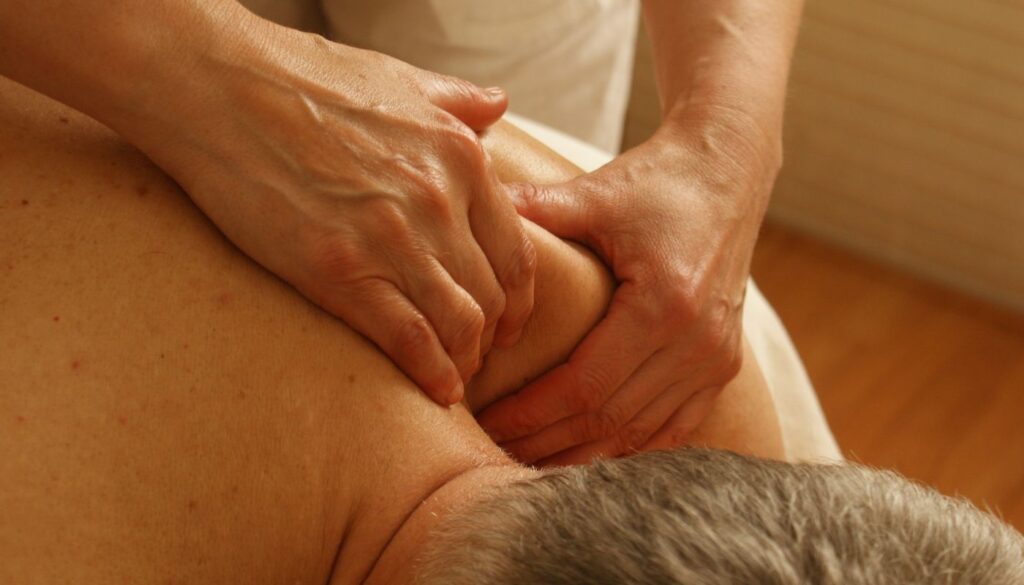
If you adopt one practice, make it abhyanga, the traditional self-massage with warm oil. Sesame oil is the classic choice for vata. Warm a few spoonfuls, work it over the whole body in long strokes, sit for ten minutes, then shower. Ashtanga Hridayam recommends it daily, and it answers vata’s dryness, cold and restlessness in a single unhurried gesture. Traditionally it is used to settle the nervous system before the day begins.
Movement that suits a vata body
Vata types tend to be drawn to exactly the training that unsettles them. Fast classes, high-intensity intervals, long runs, hot rooms, a different sport every month: all of it is light, mobile and stimulating, and all of it feeds a dosha with plenty of those qualities already. The vata person who feels wonderful for the first three weeks of a running programme and then cannot sleep, cannot eat and has lost four pounds is a familiar story.
What works instead is shorter, warmer, slower and repeated. Twenty to forty minutes is usually enough, five or six days a week, at an effort where you could still hold a conversation.
- Walking is the most vata-friendly exercise there is. Thirty minutes at a steady pace, in daylight, out of the wind.
- Yoga suits vata when the postures are held rather than flowed. Forward bends, gentle twists, supported backbends, legs up the wall. Four to six rounds of sun salutation at a slow count, not twenty at speed. Finish with ten minutes lying still, which for a vata nervous system does more than the postures did.
- Strength work two or three times a week: moderate weight, five to eight repetitions, ninety seconds of rest between sets, stopping two repetitions short of failure. Vata builds muscle slowly and loses it quickly, so consistency beats intensity by a wide margin.
- Swimming in warm water only. A cold pool in January is not a vata practice.
- Five minutes of alternate nostril breathing afterwards settles the system faster than stretching does.
Time it sensibly. Train after breakfast rather than on an empty stomach, keep something warm on the body before and after, and avoid hard sessions after seven in the evening, which will keep a vata mind awake however tired the legs feel.
The signs of having overdone it are specific: joints that crack more than usual, appetite swinging between ravenous and absent, weight coming off without trying, waking at three, and a wired feeling that is not the same thing as energy. When those show up, the answer is a week of walking and cooked food rather than a harder programme.
Vata at work and in relationships
A vata mind is an asset in any job that rewards starting things. Vata people brainstorm well, teach well, improvise well, and see connections other people miss. They are usually the one who has the idea in the meeting. They are less often the one who ships it in March.
The difficulty is rarely ability and almost always structure. Open-ended deadlines, unbroken calendars and jobs with no fixed rhythm are hard on vata, and rotating shift work is hardest of all because it removes the one thing vata most needs. If the job cannot change, borrow structure from outside it: one written task for the day rather than a list of nine, calendar blocks that end at a time, a deadline set a week before the real one, and a lunch you actually stop for. Vata people are often told they need more discipline. What they need is more scaffolding, which is a different thing and much easier to arrange.
In relationships, a balanced vata is warm, funny, quick to affection and genuinely curious about the other person. Out of balance, the same sensitivity turns into worry, and a message left unanswered for six hours becomes a whole story by evening. Vata partners need reassurance more than they like admitting, and they settle with predictability far more than with grand gestures. A regular Tuesday walk together does more for a vata nervous system than a surprise weekend away.
Pairings have their own weather. Vata with pitta puts speed and fire in the same room, which produces a great deal and burns out in tandem if neither of them holds mealtimes. Vata with kapha looks easier on paper, and kapha steadiness does give vata something to lean on, though the kapha partner may want to sit still on a Sunday when the vata partner wants to be anywhere else. Vata with vata is delightful and slightly chaotic, and needs at least one shared routine that neither party is allowed to renegotiate.
When vata shares the lead
Single-dosha types are the minority; most people have two doshas running close together. Vata-pitta pairs vata’s lightness and speed with pitta’s heat and drive, and vata-kapha pairs the two cold doshas, creative yet steady and very much in need of warmth. Both still need the vata fundamentals, especially through autumn. We look at each combination properly in our guide to dual-dosha types, and the full map of all seven constitutions sits in our overview of Ayurvedic body types. If fire feels like your stronger current, read the pitta body type guide next; if you recognise more weight and slow steadiness than lightness, the kapha body type guide will fit you better.
If the quiz gave you vata, start here
Reading a full constitutional guide and then changing everything on Monday is a very vata response, and it lasts about nine days. Take four things instead and give them a fortnight.
- Eat at the same three times every day. Pick your hours, roughly seven, half past twelve and seven, and hold them even on the days you are not hungry.
- Make breakfast warm and cooked. Porridge is enough. This one change fixes more vata digestion than any supplement on the shelf.
- Lights out by half past ten. Not in bed at half past ten with a phone. Lights out.
- Oil your feet before bed. Two minutes, warm sesame oil, socks on.
After two weeks, add full-body abhyanga three mornings a week. After a month, come back to the exercise section and adjust your training. Somewhere in the second month most vata people notice that the small hours have gone quiet and the bloating has stopped. That tends to be the order improvement arrives in: sleep first, then digestion, then energy, then the mind.
Keep in mind that a quiz is a starting point rather than an assessment. A trained practitioner reads constitution from the pulse, the tongue, the skin, the history and a long conversation, and often finds a more layered picture than a questionnaire produces. If reading constitutions properly is something you would rather learn than only receive, our guide to Ayurveda certification sets out how that training is structured and what a credible programme covers.
Common questions about the vata type
Can a vata type build muscle or gain weight?
Yes, slowly. Vata frames respond to patient, consistent strength training, warm protein-rich meals at regular times, and more rest between sessions than other types need. What rarely works is forcing it: heavy training on an irregular schedule raises vata and undoes its own gains.
Am I a vata type, or just stressed?
A fair question, because stress raises vata in almost everyone. Ayurveda separates prakriti, the constitution you were born with, from vikriti, the state you are in now. If the lightness, dryness and quickness have been with you since childhood, that is constitution; if they arrived with a hard year, that is a vata state that will ease. We unpack the difference in prakriti vs vikriti, and the dosha quiz assesses the two separately.
What aggravates vata most?
Irregularity, more than any single food. Skipped meals, shifting bedtimes, travel, cold windy weather and back-to-back stimulation all push vata up. If you change only one thing, eat warm food at regular times; most vata people notice the difference within a couple of weeks.
Should a vata type try intermittent fasting?
Usually not, and vata types are often the people most drawn to it. Fasting is light, dry and mobile, which is vata piled on vata, and an eating window that leaves a vata person with nothing until one in the afternoon tends to produce shakiness, broken sleep and weight loss nobody wanted. Ayurveda does use fasting, called langhana, but it is prescribed mainly for kapha conditions and for ama, the residue left by weak digestion. If you want a lighter approach, take it in a vata-friendly form: a modest early dinner and then nothing until breakfast, which gives you twelve or thirteen quiet hours overnight without skipping a meal in daylight.
Do I have to give up coffee?
No, though a vata constitution and a strong coffee habit rarely coexist peacefully for long. Coffee is bitter, drying and stimulating, so it pushes every vata quality upward, and the slump two hours later is the part that costs you. Three adjustments usually make it workable: one cup rather than three, after food rather than before, and nothing after midday. Milk and a pinch of cardamom take some of the dryness out. If your hands start to shake, your appetite disappears or your sleep frays, coffee will not be the only cause, but it is the cheapest thing to change first.
Living well as a vata type
A balanced vata person is quick, warm and inventive, with a lightness the other types quietly envy. The way there is unglamorous: warm food, steady hours, oil, rest. Start with the plate and the morning and let the rest follow.
And if you want to go further, to learn how constitutions are read and how food and daily routine are built around them, for yourself or for clients, that is the heart of our Ayurveda Lifestyle Coach Training.
This article is educational and not medical advice. Ayurvedic practices traditionally support wellbeing and belong alongside, never in place of, care from a qualified health professional.
Our self-paced training in Ayurvedic lifestyle, covering daily routine, nutrition, herbs and ethical coaching skills. See the course.