Quick answer
For a beginner, start with Vasant Lad's Ayurveda: The Science of Self-Healing if you want the system whole, or Acharya Shunya's Ayurveda Lifestyle Wisdom if you want it warm and daily-life first, and ideally read both in that order. Sixteen books are recommended here, grouped by level, with an honest paragraph on each. Reading alone will not make you a practitioner: the professional levels are defined by supervised training, 600 or more hours for health counselor and 1,500 or more for practitioner.
Ayurveda has been writing itself down for over two thousand years, so the reading list is not short. The good news is that a handful of modern books, most of them written between the 1980s and today by a small circle of teachers, will take you from complete beginner to the doorstep of formal study. Below are the sixteen we actually recommend to students, grouped by level, with an honest paragraph on each and a plain note on who each one is wrong for.
Housekeeping first: there are no affiliate links here and we earn nothing if you buy any of these. Every title below links out to its Open Library record, which is a free non-profit catalogue rather than a shop, so you can check the edition, read the ISBN, find a library copy or borrow a scan without anyone taking a cut. Get them from your library, your local bookshop or wherever you like. Our only interest is that you read well rather than widely. Two books properly lived with beat twelve skimmed.
| # | Book | Best for | Level |
|---|---|---|---|
| 1 | Ayurveda: The Science of Self-HealingVasant Lad | The whole system in one short, plain book | Beginner |
| 2 | Prakriti: Your Ayurvedic ConstitutionRobert E. Svoboda | Understanding your constitution properly | Beginner |
| 3 | Ayurveda Lifestyle WisdomAcharya Shunya | A daily routine you will actually want to keep | Beginner |
| 4 | Ayurveda: A Life of BalanceMaya Tiwari | Nutrition, seasonal menus and the ethics of eating | Beginner |
| 5 | The Complete Book of Ayurvedic Home RemediesVasant Lad | Kitchen-level answers to everyday complaints | Practical |
| 6 | The Everyday Ayurveda CookbookKate O'Donnell | Cooking ayurvedically without hunting for ingredients | Practical |
| 7 | Ayurvedic Cooking for Self-HealingUsha Lad and Vasant Lad | Traditional Indian home cooking, dosha by dosha | Practical |
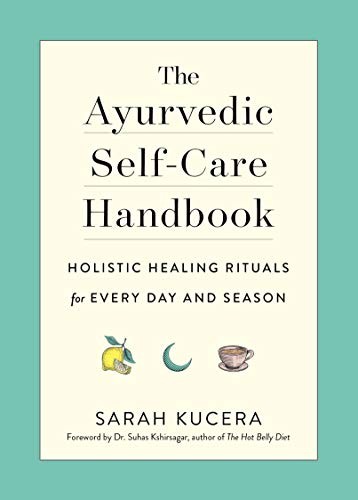
| 8 | The Ayurvedic Self-Care HandbookSarah Kucera | Knowing what to actually do on a Tuesday morning | Practical |
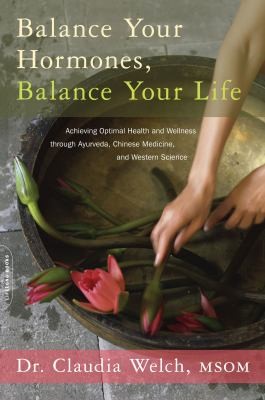
| 9 | Balance Your Hormones, Balance Your LifeClaudia Welch | Women's health, cycles and the menopausal transition | Practical |
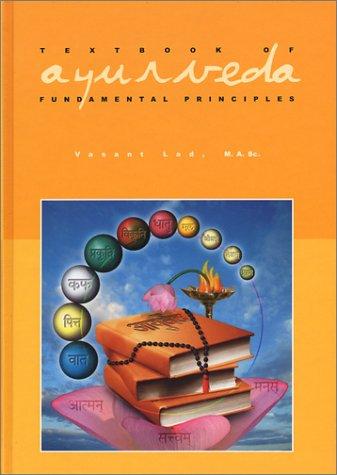
| 10 | Textbook of Ayurveda, Volume 1Vasant Lad | Where formal study actually begins | Student |
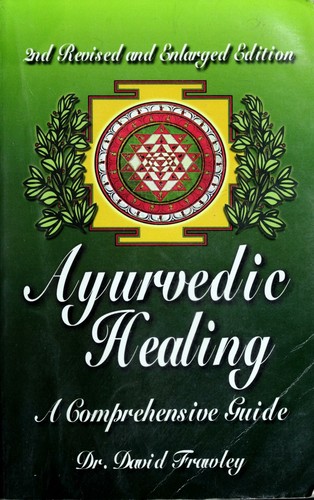
| 11 | Ayurvedic Healing: A Comprehensive GuideDavid Frawley | Seeing how a practitioner thinks across a case | Student |
| 12 | The Yoga of HerbsVasant Lad and David Frawley | The logic behind ayurvedic herbalism | Student |
| 13 | Ayurvedic Medicine: The Principles of Traditional PracticeSebastian Pole | Rigorous, properly sourced herbal reference | Advanced |
| 14 | Marma Points of AyurvedaVasant Lad and Anisha Durve | Bodyworkers and massage therapists in training | Advanced |
| 15 | Yoga and AyurvedaDavid Frawley | Yoga teachers adapting to the room | Student |
| 16 | Healing Your LifeMarc Halpern | When the theory starts to feel like memorisation | Any |
How we chose
Three filters. The book had to be a standard, something working teachers actually cite and not this year’s wellness bestseller. It had to be readable by the audience we name for it, because several brilliant books are unusable as first books. And it had to be honest about what Ayurveda is and is not, so anything promising miracle cures stayed off the list. Within that, we lean toward authors who bridge the classical tradition and a Western readership. Vasant Lad, Robert Svoboda and David Frawley account for half the list between them, which reflects the field as it genuinely is.
Start here: four first books that hold up
If you have never read anything on Ayurveda, start in this group and do not skip ahead. Any one of the four works as a first book. Which one suits you depends on whether you want the system explained, your own constitution explained, or a way of living you can begin on Monday.
1Beginner
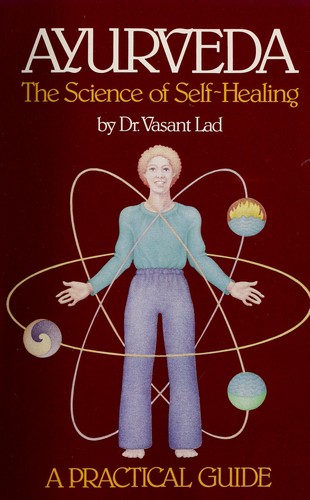
Ayurveda: The Science of Self-Healing
Best for: the whole system in one short, plain book
Still the classic first book, forty years on. Dr Lad compresses the whole system, elements and doshas and digestion and diagnosis and daily practice, into under two hundred plain-spoken pages with simple diagrams. Its age shows in places and it states tradition without hedging, but as a map of the territory it has never really been bettered. If you buy one book before deciding whether Ayurveda is for you, buy this one.
2Beginner
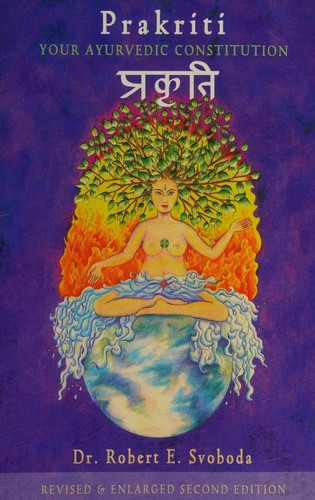
Prakriti: Your Ayurvedic Constitution
Best for: understanding your constitution properly
The best single book on the idea most people come to Ayurveda for, which is constitution. Svoboda, the first Westerner to graduate as a BAMS ayurvedic doctor in India, writes with a directness and dry wit that stops the subject ever going soft. His portraits of the types and their failure modes are uncomfortably accurate. Read it after a first overview and alongside an honest look at your own patterns; it pairs naturally with our dosha quiz and guide to the three doshas, and it helps to be clear on the difference between prakriti and vikriti before you start typing yourself.
3Beginner
Ayurveda Lifestyle Wisdom
Best for: a daily routine you will actually want to keep
The modern entry point, and the one we hand to people who find the older books dry. Shunya grew up inside a living Vedic teaching lineage and writes about dinacharya, the daily routine, with the warmth of someone describing a family home instead of a system. Less encyclopaedic than Lad, more livable; its strength is making you actually want the routine it teaches.
4Beginner
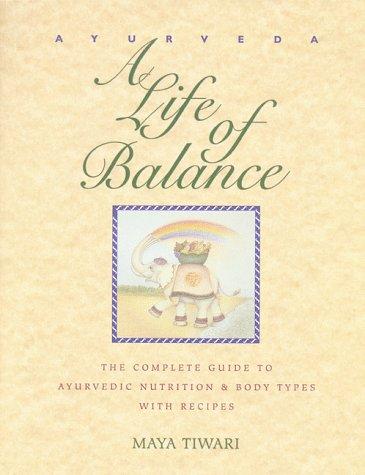
Ayurveda: A Life of Balance
Best for: nutrition, seasonal menus and the ethics of eating
Tiwari founded the Wise Earth School of Ayurveda in 1981 and published this in the mid-1990s, and it still reads unlike anything else here. Half of it is a detailed treatment of constitution and ayurvedic nutrition, with food charts, seasonal menus and daily routines worked out type by type. The other half sits closer to devotion than instruction: sadhana, the ethics of eating, the argument that how you cook matters as much as what you cook. Tiwari wrote it after coming through cancer, and the book carries that weight on every page. Some readers find the tone too reverent and want the charts without the philosophy. Others say it is the only ayurveda book that changed how they stand in a kitchen. Read a few pages before buying and you will know quickly which of the two you are.
For the kitchen and the everyday
This is where Ayurveda stops being a subject and becomes something you do. Most people who stay with the tradition for years do so because of a book in this group rather than one in the last.
5Practical
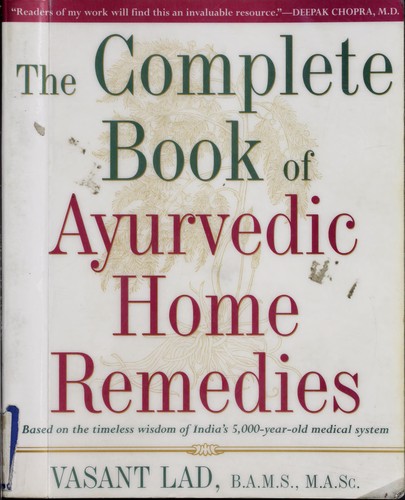
The Complete Book of Ayurvedic Home Remedies
Best for: kitchen-level answers to everyday complaints
An A-to-Z of everyday complaints with kitchen-level ayurvedic responses: gingers, ghees, spice pastes, routines. Used sensibly, it is the most practical book on this list and the one that makes Ayurveda feel like a household skill instead of a philosophy. Used carelessly it could tempt people to home-treat things that need a doctor, so hold its own rule firmly: persistent or serious symptoms go to a professional first.
6Practical
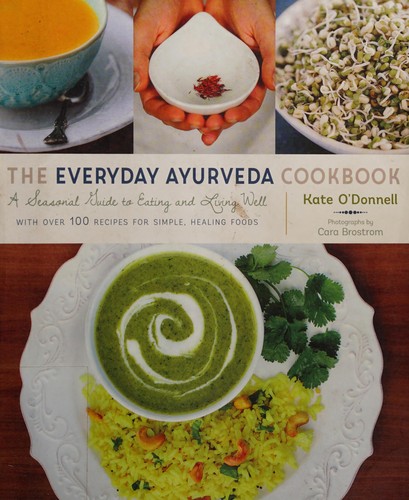
The Everyday Ayurveda Cookbook
Best for: cooking ayurvedically without hunting for ingredients
The cookbook we recommend first. O’Donnell organises simple, genuinely cookable meals by season, explains the reasoning lightly, and never demands unusual ingredients or heroic effort. It is the book that converts theory into dinner, which is where Ayurveda either becomes real or quietly dies. Her follow-up on cooking for a calm, clear mind is worth adding once the first one is food-stained.
7Practical
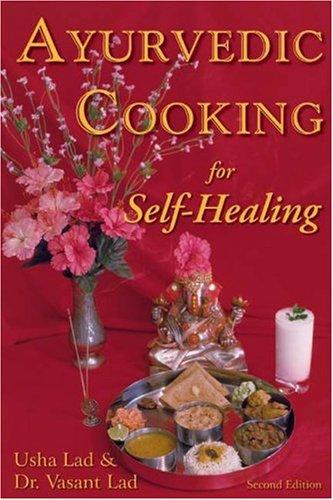
Ayurvedic Cooking for Self-Healing
Best for: traditional Indian home cooking, dosha by dosha
The traditional counterpart to O’Donnell: the food the Lads actually cook at home, with dosha guidance for every recipe and an opening section on ayurvedic food logic, covering combining, spicing and digestion more thoroughly than any other cookbook here. Expect Indian home cooking and a few hunt-for-it ingredients instead of Western convenience. That is the point of it, and the kitchari alone earns the shelf space.
8Practical
The Ayurvedic Self-Care Handbook
Best for: knowing what to actually do on a Tuesday morning
Published in 2019 and the most modern-feeling book on this page. Kucera is a chiropractor and ayurvedic practitioner, and she organises everything as practices by season: what to do in late winter, what changes in high summer, each with clear instructions and illustrations. This is the book for the person who says they understand the theory but cannot work out what to do on a Tuesday morning. Its weakness is the flip side of that strength. The theory is deliberately thin, so a reader with no grounding can follow the practices for a year without ever grasping why any of them are there. Pair it with Lad or Shunya instead of reading it alone.
9Practical
Balance Your Hormones, Balance Your Life
Best for: women's health, cycles and the menopausal transition
Dr Welch reads women’s health through paired lenses, Ayurveda and Chinese medicine on one side and Western endocrinology on the other, and does it with unusual care about where tradition ends and evidence begins. Valuable for any woman navigating stress, cycles or the menopausal transition, and a model of how traditional and modern frames can share a page without either being oversold.
For serious students
Everything below assumes you have read at least two of the books above and now want the reasoning underneath them. These are slower, denser and, in two cases, genuinely unsuitable as self-treatment manuals.
10Student
Textbook of Ayurveda, Volume 1: Fundamental Principles
Best for: where formal study actually begins
Where study proper begins. This is Lad writing for students and not for browsers: Sanskrit terminology retained and explained, concepts built in order, nothing simplified away. It is the closest thing US ayurvedic education has to a shared foundation text, with two further volumes continuing into assessment and clinical method, and it rewards slow reading with a notebook. Not a first book; an excellent third one.
11Student
Ayurvedic Healing: A Comprehensive Guide
Best for: seeing how a practitioner thinks across a whole case
Frawley’s survey of ayurvedic approaches condition by condition, constitution by constitution. Its breadth is the appeal and the hazard: it shows how a practitioner thinks across the whole terrain, and it absolutely should not be used as a self-treatment manual. Read it to understand the clinical mindset you would be training toward, alongside our guide to becoming a practitioner if that road tempts you.
12Student
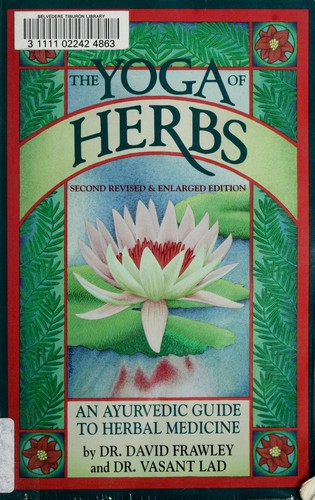
The Yoga of Herbs
Best for: the logic behind ayurvedic herbalism
The standard Western introduction to ayurvedic herbal energetics: taste, heating or cooling action, post-digestive effect, dosha affinity, the grammar behind why Ayurveda reaches for ginger here and coriander there. Around eighty herbs profiled, many already in your kitchen. Herbs are also where self-study should get humble. Learn the logic from this book, and leave protocols to the trained.
13Advanced
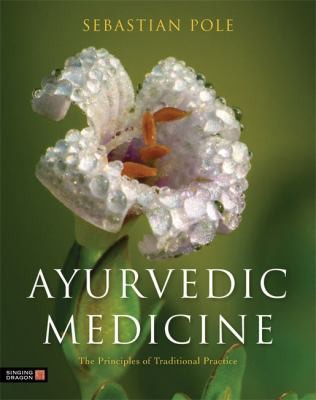
Ayurvedic Medicine: The Principles of Traditional Practice
Best for: rigorous, properly sourced herbal reference
The most rigorous herbal text on this list, from the co-founder of Pukka Herbs: over a hundred plant profiles with classical sources, energetics, dosage ranges and safety notes, plus fifty traditional formulas, written to practitioner standard. First published by Churchill Livingstone in 2006 and reissued by Singing Dragon. For self-study it works as a reference and as a reality check on sloppier sourcing elsewhere. If The Yoga of Herbs opens the door, this is the room behind it.
14Advanced
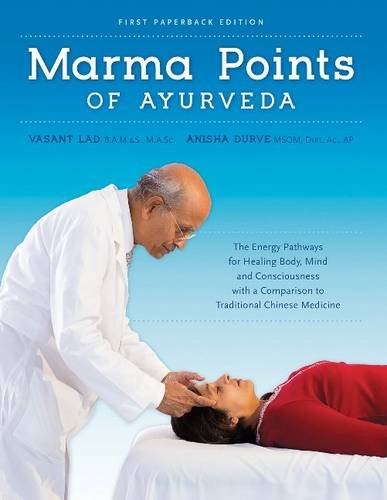
Marma Points of Ayurveda
Best for: bodyworkers and massage therapists already in training
A specialist reference on the marma points: anatomical locations, energetic associations and therapeutic use, at several hundred pages with detailed illustrations. Nobody should buy this as a second or third book. It is for bodyworkers, massage therapists and students already inside a training program, and to them it is genuinely useful, because the anatomical descriptions are precise and it has become the standard English reference on the subject. If you teach yoga or do massage work and want one advanced text that adds something to your hands, this is it. If you are still deciding whether Ayurveda interests you at all, it is money in the wrong place.
15Student
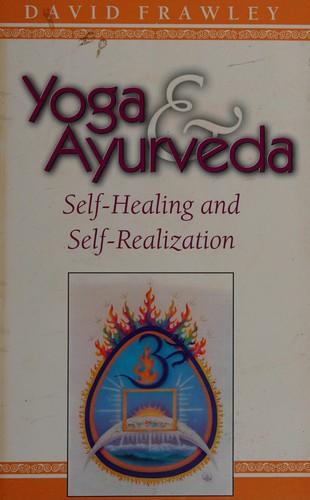
Yoga and Ayurveda
Best for: yoga teachers adapting to the constitutions in the room
The standard text on how the two sister sciences interlock: doshas met by asana and pranayama, subtle anatomy, mantra and meditation read through an ayurvedic lens. If you teach yoga, this is probably your highest-value book on the page, because it turns a class plan into something you can adapt to the actual constitutions in the room. Denser than Frawley’s introductory work, and worth the effort by the second reading.
One personal account, for when the theory goes dry
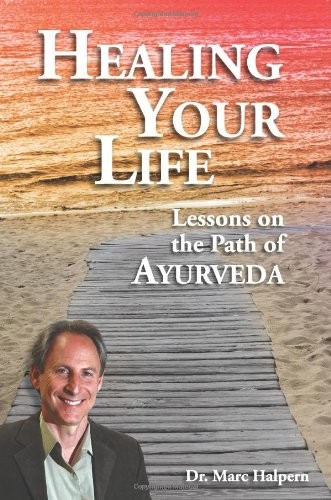
16Any
Healing Your Life: Lessons on the Path of Ayurveda
Best for: when the theory starts to feel like memorisation
Halpern founded the California College of Ayurveda and co-founded the National Ayurvedic Medical Association, which makes him about as establishment as US Ayurveda gets. This short book from 2011 is not a textbook. It is fifteen lessons drawn from his recovery from a severe autoimmune illness and the years of chronic fatigue that followed, written as reflection rather than protocol. What makes it worth the two evenings it takes is that it shows the tradition from inside an illness instead of from the outside of a clinic, and it is honest about how slow and unglamorous the recovery was. Read it when the textbooks start to feel like memorisation and you have forgotten what any of it is for. Do not read it for technique, because there is very little.

The classics, and how to approach them
Everything above stands on the Charaka Samhita, Ayurveda’s foundational medical compendium, roughly two thousand years old. Reading it in translation is genuinely rewarding and genuinely a commitment: multi-volume, repetitive by design, and organised for memorisation instead of browsing. The two standard English editions are P.V. Sharma’s four-volume translation and the older Sharma and Dash edition with commentary; either serves.
If a four-volume commitment is too much, the gentler way in is Dominik Wujastyk’s The Roots of Ayurveda, a Penguin Classics anthology of translated selections from Charaka, Sushruta and later authors, with a scholarly introduction to each. The Wellcome Collection, which holds one of the world’s major collections of Sanskrit medical manuscripts, catalogues the 2003 revised edition here. Three hundred and sixty pages rather than several thousand, and it tells you quickly whether the full text is for you.
You can also read an older English Charaka for nothing. Kaviraj Avinash Chandra Kaviratna’s translation, published in Calcutta in fascicules from 1890 onward and continued after his death by his son Pareshnath Sarma, is out of copyright and scanned in full at the Internet Archive from a copy held by the Bibliothèque interuniversitaire de Santé in Paris. It runs to nearly two thousand pages. The Victorian English is heavy and the terminology predates modern conventions, so it makes a poor first encounter with the text, but it costs nothing and it settles the question of whether you want a modern edition on your shelf.
Approach it the way you would a legal code, not a novel. Do not start at page one and grind. Start with the Sutrasthana, the first of the eight sections, where the philosophy sits along with the definitions of health that everything else refers back to. Read one chapter a week and no more. Keep your own glossary as you go, because the Sanskrit terms recur constantly and the translations differ between editions, which is bewildering until you have your own list to check against. Expect repetition and long enumerations: the text was memorised aloud, so the repetition is the memory aid and not padding. Read a modern commentary alongside it if you can get one, because a great deal of what the text assumes was taught by a teacher and never written down. And treat the whole thing as literature and foundation, never as a treatment manual. Classical dosages and preparations belong in trained hands.
What books cannot teach you
Worth being blunt about the ceiling, because a well-read self-taught reader can end up considerably more confident than they should be.
Pulse reading is the clearest example. Every book on nadi pariksha describes the same thing: three fingers on the radial artery, a distinct quality under each, snake and frog and swan as the classical images for vata, pitta and kapha. You can memorise all of that in an afternoon and it will put nothing useful under your fingers. Pulse is trained by having an experienced person feel a pulse, then feeling the same pulse yourself, then being told what you missed, several hundred times over. There is no reading substitute. Much the same applies to tongue and eye assessment, and to reading someone’s constitution accurately from across a room.
The second thing books cannot give you is a teacher who watches you work. Supervision is what the 50 and 150 supervised client encounters in the professional standards exist to buy. Their value is not the information; it is being corrected in the moment by someone who has seen that particular mistake before. Reading teaches you what to say. Supervision teaches you when to stop talking.
Third, and hardest to name, is clinical judgement: the ability to decide, sitting in front of one specific tired forty-year-old, which of the six plausible things in the textbook is the one that matters, how much change she can realistically absorb this month, and whether the whole conversation belongs with her doctor instead. Books present cases already sorted into their answers. Real people arrive unsorted, and the skill of sorting them is built from volume, feedback and enough failures to have acquired some humility. No amount of reading generates it.
There is a fourth gap, smaller but more likely to catch you first. No book here tells you what is legal where you live, what an insurer will cover, or how to run a practice. Consent forms, record-keeping, scope statements and referral protocols appear in none of these titles, and all four are needed the first time a real client sits down opposite you. If you are heading that way, our guides to ayurveda certification, to the difference between a counselor, a practitioner and a coach and to what a lifestyle coach actually does cover the ground the bookshelf leaves out.
What books do supply is the framework, the vocabulary and a feel for the shape of the tradition. That is a great deal, and for someone practising Ayurveda at home it is very close to everything they need. For someone intending to work with other people, it is roughly a third.
Editions and buying notes
Most of these titles have been in print for decades through small specialist publishers, so secondhand copies are plentiful, cheap and exactly as useful. Edition differences are minor throughout, and libraries stock the majority. One modern caution: print-on-demand marketplaces now carry lookalike ayurveda titles of no provenance, some of them machine-generated. Check the author and publisher against this list before buying anything unfamiliar. A free library catalogue settles it in seconds. Pole’s book, for example, has an Open Library record giving the 2006 Churchill Livingstone edition, the page count and the ISBN, which is the kind of paper trail a fabricated title never has. Every book in the list above links to the same kind of record, so you can check any of them in a few seconds. When in doubt, order through a bookshop that can trace what it sells.
Three reading orders, depending on where you are headed
Order matters less than pace, but it does matter. Here are three sequences that work, sorted by what you actually want out of this.
If you are curious and not planning anything
Read Lad’s Science of Self-Healing first for the map. Then Shunya’s Ayurveda Lifestyle Wisdom, and build the routine it describes for a month before opening anything else. Then O’Donnell’s cookbook, and cook from it until the spine gives way. That is three books and about a season, and it will tell you more than any amount of further reading. Most people who stop here are not quitting. They got what they came for, which was a way of living rather than a subject to study.
If you want to coach or teach
Start where the curious reader starts, then add Prakriti for constitution done properly, and either Tiwari or Kucera depending on whether you think in principles or in practices. Then The Yoga of Herbs, read strictly for the logic and not for protocols. If you teach yoga, Frawley’s Yoga and Ayurveda belongs here and will probably be the most useful book on this page for you. Somewhere in that sequence, start applying the material to people who are not you, because the gap between understanding a routine and helping a stranger keep one is the entire skill. That is also the point at which a structured course begins to earn its keep.
If you are heading for clinical training
Read the general list, then move to the Textbook of Ayurveda and treat it as a course with a notebook rather than a book to finish. Add Frawley’s Ayurvedic Healing for the shape of clinical thinking and Pole for herbal rigour, with the Sutrasthana of Charaka read slowly alongside. Marma Points if bodywork is part of the plan. Then stop reading and go and get supervised, because everything past this point is bought with hours and not pages. The route and the timelines are in how to become an ayurvedic practitioner, and the money side is in what certification costs.
Pace matters more than order in all three cases. One book a season, actually applied, with its routine tried for a month, its recipes cooked and its ideas tested against your own sleep and digestion, will teach you more than the whole list read in a fortnight. Ayurveda is unusually kind to slow readers.
Where the reading stops working
A shelf of Ayurveda reads beautifully and changes nothing by itself. The system only shows its worth when your mornings, meals and sleep start moving, and at that point most people want structure and feedback more than they want another chapter. That is the gap our Ayurveda Lifestyle Coach Training fills: 108 self-paced hours that turn this reading into assessment skills, routine design and actual coaching method, for €249. Books first, by all means. Then practice.
Quick questions
What is the best ayurveda book for beginners?
Vasant Lad’s Ayurveda: The Science of Self-Healing if you want the system whole; Acharya Shunya’s Ayurveda Lifestyle Wisdom if you want it warm and daily-life first. Ideally the pair, in that order.
Can I become an ayurvedic practitioner just by reading books?
No, and be wary of anywhere implying otherwise. Professional levels are defined by supervised training: 600+ hours for health counselor, 1,500+ for practitioner, with supervised client encounters at the centre of both. Books carry you to the door; certification walks you through it.
Should I read the Charaka Samhita as a beginner?
Honestly, no. Without the framework the modern books teach, the classics read as beautiful fog. Come to Charaka after a year of grounded practice, or start with Wujastyk’s anthology of selections, and the text repays the wait many times over.
How many ayurveda books do I actually need?
Three, for almost everybody: one overview, one on constitution, one you cook from. A fourth if you teach yoga. Everything beyond that is either specialist reference or procrastination dressed as preparation, and the difference between them is usually whether you are still applying what you already read.
Our self-paced training in Ayurvedic lifestyle, covering daily routine, nutrition, herbs and ethical coaching skills. See the course.